
Tel 09 419 0450

|

Osteopaths New Zealand | Ngā Mātanga Wheua o Aotearoa

Advocacy

Speaking up for osteopathy in Aotearoa

ONZ represents osteopaths to government, regulators, ACC and education providers. Here is what we have said, what has changed as a result, and what we are working on now.

Open consultations

There are no open consultations right now. When one opens, we will list it here with the deadline and how members can feed into ONZ's submission.

Tell us about an issue

Our work

Submissions, agreements and outcomes

Most recent first. Filter by topic to see the work that matters most to your practice.

Filter by topic
2024 to present · University of Otago and MCNZIn progress

Recognising osteopathy in postgraduate education

Recognition
What we did

After an osteopath was declined entry to an Otago programme, ONZ raised the issue with the University of Otago and the Medical Council of New Zealand. MCNZ has confirmed that the wording in Cole's Medical Practice in New Zealand was not intended to question osteopathy's status as a regulated profession.

Why it matters

The barriers osteopaths face in postgraduate education are now recognised in the Ministry of Health's Allied Health Report: Addendum 2026. We have followed up with both organisations ahead of 2027.

Read the full updateHide the full update

In late 2024, an osteopath was declined entry to the University of Otago's Postgraduate Diploma in Sport and Exercise Medicine. The decision was linked to Cole's Medical Practice in New Zealand, a Medical Council of New Zealand (MCNZ) publication that describes osteopathy as "complementary and alternative medicine".

ONZ raised this directly with Otago's Pro-Vice-Chancellor, Health Sciences. Otago responded:

  • confirming that its regulations do not prevent osteopaths from entering the programme
  • apologising for the applicant's experience
  • suggesting an alternative postgraduate pathway
  • committing to review its regulations and how it recognises other professions' qualifications and registration.

Through 2025, Otago also shared other courses osteopaths could apply for.

ONZ also asked MCNZ to correct the description in Cole's. In January 2026, MCNZ confirmed that:

  • osteopathy has been recognised under the Health Practitioners Competence Assurance Act since the Act was first passed
  • the wording in Cole's was not intended to question osteopathy's status as a regulated profession
  • ONZ's concerns will be taken into account if Council produces a further edition.

In March 2026, the Ministry of Health published the Hauora Haumi Allied Health Report: Addendum 2026. It adds profiles for osteopathy and optometry to the Ministry's allied health report. ONZ contributed to the osteopathy profile alongside the Osteopathic Council of New Zealand (OCNZ) and the Ara osteopathic programme leaders. The profile notes that some education providers and professional development funders do not recognise osteopathy qualifications, and that this limits osteopaths' access to funded training. It identifies this as an issue to be addressed.

ONZ has now followed up with both organisations. We have asked Otago for an update on its review of regulations ahead of its 2027 planning cycle, and offered our support. We have also asked MCNZ about the timing of any new edition of Cole's, and offered input alongside OCNZ.
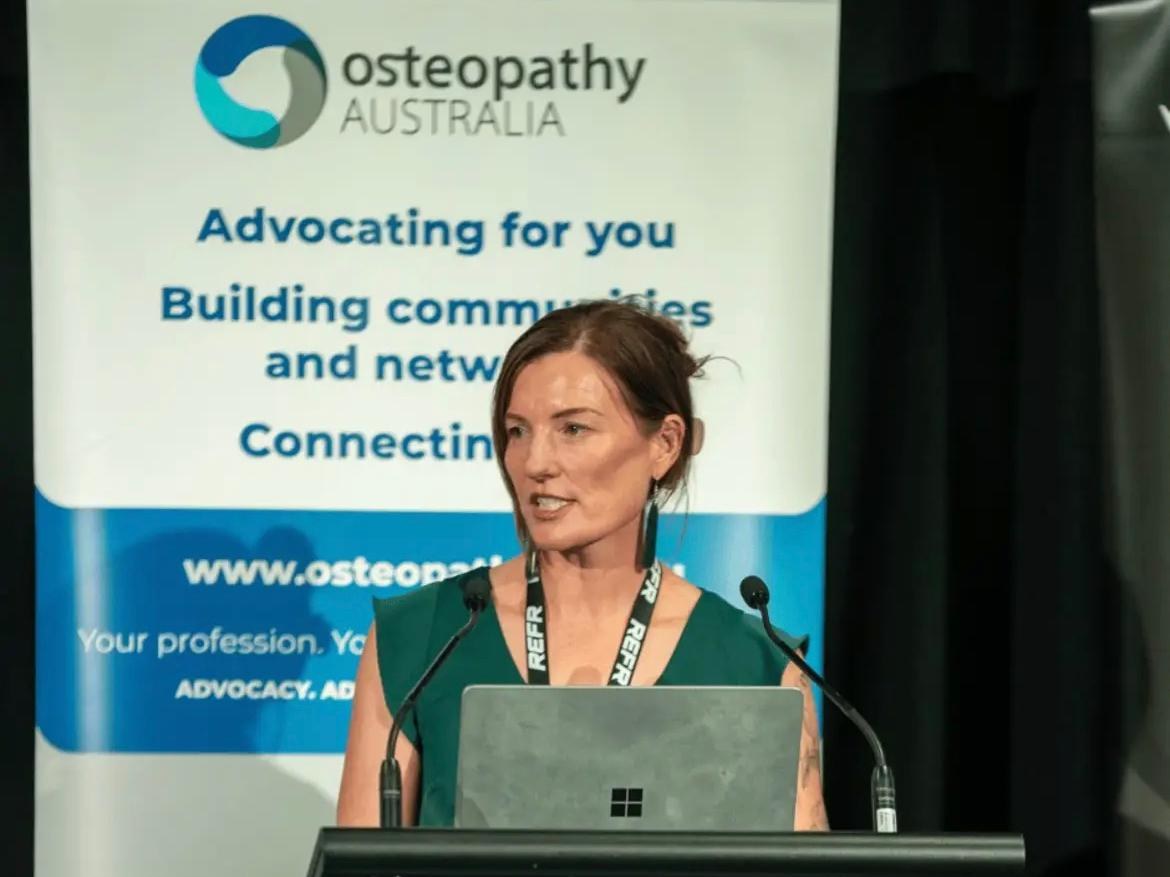
Anj Young speaking at a lectern in front of an Osteopathy Australia banner
Anj Young presenting the PROMs pilot findings at the Osteopathy Australia Conference, Gold Coast.
16–17 October 2026 · Osteopathy Australia Conference, Gold CoastPilot complete

National PROMs pilot: building a data-informed profession

Education and research
What we did

ONZ led New Zealand's first national pilot of patient-reported outcome measures (PROMs) in private osteopathic practice. Six clinics took part, with A/Prof Kesava Kovanur Sampath and Dr Carol Fawkes (NCOR). The pilot recruited 51 patients against a target of 30.

What we found

PROMs can be collected in everyday osteopathic practice, given simple patient access, a named lead in each clinic and well-designed follow-up. Recruiting patients was straightforward; keeping them engaged with follow-up was the main challenge.

Why it matters

Good outcome data builds the evidence base for osteopathy in New Zealand and strengthens our case with ACC, the Ministry of Health and funders.

28 August 2026 · Osteopathic Council of New ZealandSubmitted

Prescribed qualifications for registration

Regulation and standards
What we said

ONZ supported both of OCNZ's proposed changes:

  • removing specific New Zealand qualification titles, so future education providers can name their programmes without a rule change, while accreditation standards stay the same
  • relying on current registration with the UK General Osteopathic Council for the Competent Authority Pathway, in line with the OCNZ and GOsC agreement that took effect on 1 January 2026
Why it matters

It supports new osteopathy programmes in New Zealand and a clearer pathway for UK-registered osteopaths, without lowering entry standards.

15 July 2026 · Osteopathic Council of New ZealandSubmitted

Needling Techniques in Osteopathic Practice scope review

Regulation and standards
What we said

ONZ supported replacing the Western Medical Acupuncture scope with a needling scope that is not tied to one technique, with automatic transfer for current scope holders. We also asked OCNZ to:

  • wait until an accessible course or assessment pathway exists before new requirements start
  • publish how existing training and qualifications will be recognised
  • keep "osteopath" as the main public title
  • develop cultural safety guidance in partnership with Māori
Why it matters

It protects members who already use needling in practice, and keeps a realistic pathway open for those who want to train.

30 April 2026 · MBIE: ACC Cost of Treatment RegulationsAwaiting response

ACC regulated treatment rates

ACC and funding
What we said

ONZ supported Option B: a 9.45% increase to all regulated treatment rates, matching ACC's own estimate of labour-cost growth from July 2022 to June 2024. In our April 2026 member survey:

  • 100% of respondents supported Option B
  • 94% said their practice costs had increased significantly since June 2024

We also asked that any six-month invoicing limit include an exceptions process for delays outside a provider's control.

Where it is now

On 14 October 2026, ONZ followed up with MBIE and the Minister for ACC, Hon Scott Simpson. We are awaiting a response.

Why it matters

When rates fall behind real costs, co-payments rise and ACC claimants find treatment harder to access.

March 2026 · Ministry of HealthPublished

Osteopathy profile in the Hauora Haumi Allied Health Report: Addendum 2026

Recognition
What we did

ONZ worked with the Ministry of Health, the Osteopathic Council of New Zealand and the Ara osteopathic programme leaders to develop the osteopathy profile, which the Ministry published in March 2026.

Why it matters

Osteopathy now has its own profile in the Ministry's allied health report, which also records that some education providers and funders do not yet recognise osteopathy qualifications.

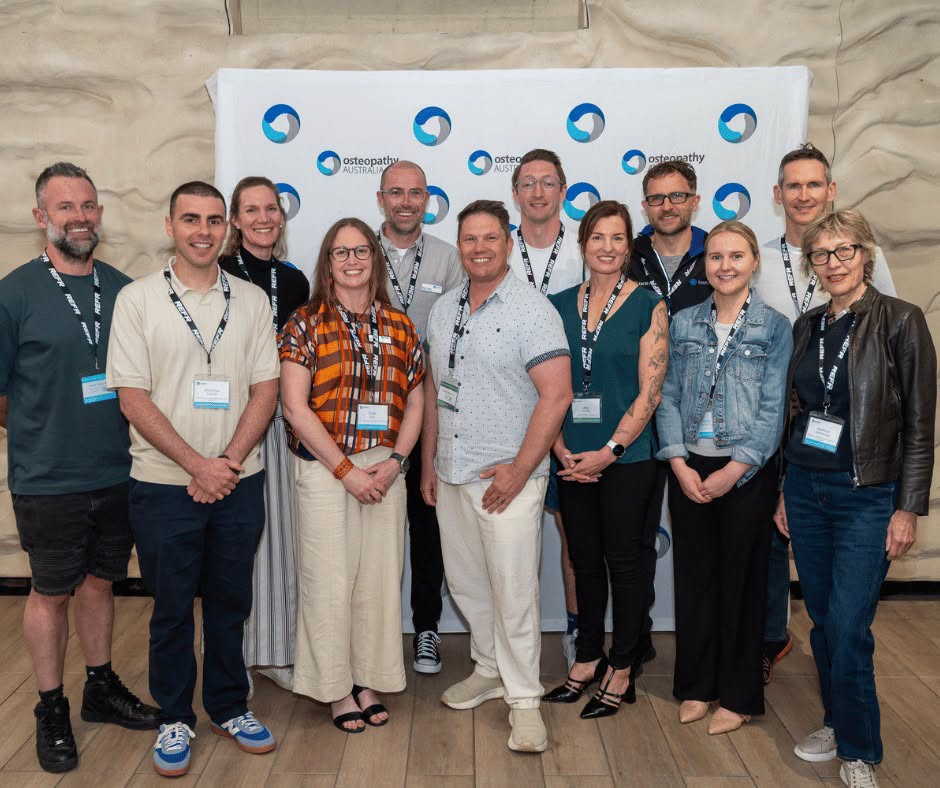
ONZ and Osteopathy Australia representatives standing in front of an Osteopathy Australia backdrop
ONZ and Osteopathy Australia representatives.
2025 to present · Osteopathy AustraliaOngoing

Working with Osteopathy Australia

Education and research
What we're doing

ONZ and Osteopathy Australia are working together to strengthen osteopathy on both sides of the Tasman. The collaboration has already produced the Advanced Practice Pathway, and ONZ presented its national PROMs pilot at the 2026 Osteopathy Australia Conference.

What it means for members

More opportunities for professional development, shared learning and recognition, with more to come.

Why it matters

A connected trans-Tasman profession gives our members wider access to education, research and career pathways than either association could offer on its own.

December 2025 · Advertising Standards AuthorityPartly adopted

Therapeutic and Health Advertising Code review

Regulation and standards
What changed

Three of ONZ's recommendations are in the new Code:

  • genuine reviews about service quality are permitted, if they make no claim about treatment results
  • "Health professional" is now defined by registration under the HPCA Act
  • there is a formal definition of "vulnerable audience"
Not adopted

Our proposal to allow verified testimonials about treatment results. Rule 2(f) is unchanged, and we will keep pushing for clearer guidance on therapeutic claims.

Why it matters

The Code applies to all advertisements from 1 July 2026, including clinic websites, Google reviews and social media.

2025 · Developed with Osteopathy AustraliaEstablished

Advanced Practice Pathway: Exercise-Based Rehabilitation

Education and research
What we did

ONZ's Sport, Exercise and Rehabilitation Special Interest Group worked with Osteopathy Australia to create a New Zealand advanced practice pathway, based on OA's established framework. There are two routes to the Advanced Exercise-Based Rehabilitation Osteopath title:

  • a tertiary pathway, for practitioners completing an accredited qualification
  • a vocational pathway, recognising existing clinical expertise
How it works now

Applications are currently assessed through Osteopathy Australia.

Why it matters

Experienced New Zealand osteopaths have a formal way to have advanced practice recognised, against a standard already used in Australia.

Something we should be raising?

Members shape every submission we make. If a funder, regulator or education provider is creating a barrier for osteopaths or your patients, tell us. Our advocacy carries more weight with every member behind it.

Osteopaths New Zealand | Ngā Mātanga Wheua o Aotearoa

Representing Osteopaths in
Aotearoa, New Zealand

Tel 09 419 0450
Email info@osteopathsnz.co.nz
Address 97 Don Buck Road
Massey
Auckland 0614, New Zealand